
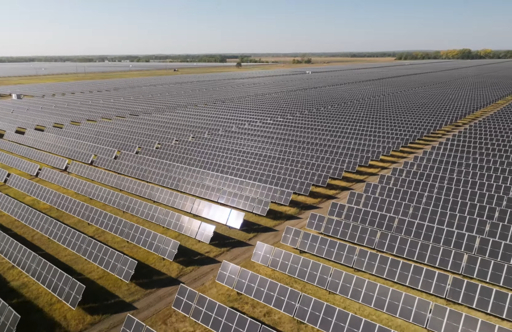
Rodents generating energy on a hamster wheel thingy is our last, best hope! /s
300 MW of grid storage too btw.
300 MW for how long? A second? An hour? A day?
I have committed the sin of mixing energy with power units.
I think its 300 MWh. Phase 3 just completed. Here is the proposal from Phase 4, which is supposedly going to increase from 300MW(?) to 600MW(?). The proposal is also kinda loose with their units.
If it’s Lithium-ion battery storage, I’d wager the dis/charge rate is anywhere from 2-4 hours.
Assuming 300 MW, that’s a 600-1,200 MWh battery.
Assuming 300 MWh, that’s a 75-150 MW battery.
That’s not possible. We need clean, beautiful coal!!! Drill baby drill!!!
/s
I used to live not far from there, in Monticello. Everybody knew there was nuclear power plant in town, but most people when asked where it was pointed to the coal plant in this story which a couple towns away.
all this solar projects are going to fail
In the same way that you failed language?
explain why, please justify this comment?
im against , i see them fail at Greece and now are just rusty metals at the field instead of farms
How the fuck is it I don’t work in the field or live in Greece, yet I comprehend the issue you’re referring to and you do not?
Greece built a shitload of panels without the storage capacity. That’s all.
Then these gigantic installations directly on the grid caused capacity overruns and have to be just taken offline.
Katalavaineis?
Sure thing buddy.
I think we should keep the coal plant in warm storage just in case. One big hail storm/tornado could cripple this system. Just food for thought in an emergency.
It is neither cheap nor easy to keep a coal plant in working order with a supply of fuel, “just in case”. Especially one that was set to retire anyway so probably has a lot of deferred maintenance and end of life components. Very much not worth it
Redundancies for plant outages are already a feature of the grid
In fairness, I don’t think that a coal power plant would fare any better against a tornado.
In 2024 a tornado hit a solar field. I was wondering how the industry was responding to this.
Found this article.
https://www.powermag.com/the-solar-industry-is-getting-smarter-about-storm-defense/
Some solar trackers, for example, offer dynamic stow angles that adjust based on real-time weather conditions. Whether it’s high winds or hail, these trackers can optimize stow angle to minimize damage. A key feature of these systems is their ability to vary stow angles across a site, accounting for both complex weather patterns and diverse land contours.
I cannot find details on if these are fixed or tracking panels.
Also looking at the map, it doesn’t seem like this is all one big facility, but distributed across a few miles.
Hail isn’t a big problem for solar
Nah, convert it to nuclear
I would have suggested that as its the best bang for the buck. But people lose their mind when its on the table…
Building nuclear in a country with proper safety standards and everything is insanely expensive, where did you get the idea that it’s the “best bang for the buck”? There are always cost overruns and they tend to be a multiple of the original project cost estimate.
Also you need to keep buying/extracting nuclear fuel to run a nuclear power plant… With solar, the sun is the fuel! With no buying or extracting, it removes a big ongoing cost from the equation and significantly improves self-reliance. I don’t understand how this seems to not communicate to people.
A good chunk of the cost of a nuclear plant is all the steam driven turbines and power infrastructure. That’s already there in a retrofitted coal plant. And even without that, nuclear is cheaper in the long run. And even without that, not everything is about the god damned money.
You want nuclear plant and natural disaster to meet each other?
I’m not sure why you’re getting down votes for this. Isn’t having some redundancy or backup plan a good idea? What am I missing here?
Because small scale breakdowns are irrelevant with today’s power grids. Redundancy is provided via the next city/country nearby. Importing the power might be a few cents more expensive during peak hours, but that’s nothing compared to the costs of having an outdated power plant doing nothing for years.
However, the real answer why he’s being down voted is because it’s a pretend intellectual argument favoured by people against renewable power generation, without actually contributing anything of worth.
Likely because the coal plant was set to retire anyway. No point in paying someone millions to keep this coal plant as a backup for rare events.
The Power company will have contingencies and the national grid to rely on, which are cheaper than keeping an old coal plant warm.