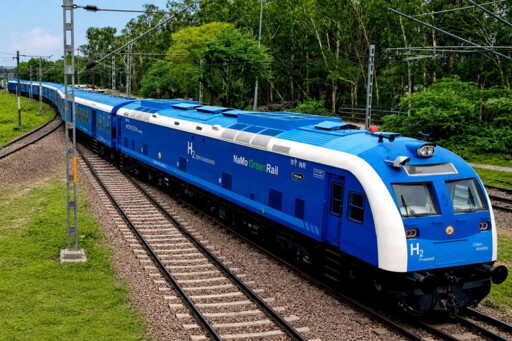
And where do they get the hydrogen???
Fossil fuel… But you really have to dig to find where they admit it.
Last time this came up it was buried in the documentation about how wind and solar don’t provide enough.In all fairness hydrogen is good battery store for green energy too.
This is exactly what I was thinking.
I sense a big kaboom in this train’s future.
No specialist or anything, but I imagine most of the kaboom potential is puncture-based. I don’t expect much to make it to the heart of a train as trains generally win in collisions.
Pressure vessel fatigue is possible too, but generally rated and tested well above pressure relief valves.
Depends on how you define “win”. It only takes one small hydrogen leak for a catastrophe. A train will wreck any car or truck for sure, hit or miss with another train, but even a simple derailment of tanker cars often results in a significant mess.
There are nuclear rail transport containers that have been tested in collisions, and they’ve never leaked, but they’re very big and heavy for not a whole lot of volume. And they’re sealed, while a fuel tank needs holes to let fuel in and out.
Luckily hydrogen floats upwards pretty quickly. So paradoxically, storage tanks are safer the less protection they have around them. Or at least, above them.
Yes Rico,kaboum
deleted by creator