
cross-posted from: https://discuss.online/post/42806046
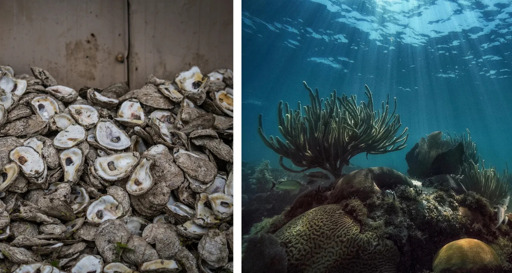
Some called it reckless dumping. Others warned it would be detrimental to an already dwindling ecosystem. And for a while, these concerns seemed valid. Even the researchers running this giant experiment had their doubts as no visible progress was initially seen.
All of these things and more helped revive fish, turtle, and dolphin populations to numbers not seen in over two and a half decades. Layer by layer, the ocean floor had rebuilt itself until the results were visibly undeniable.
Restoring the balance of these elements is not only critical to marine life, but human life as well. And we’re not just talking about food supply here. A lack of fish means a lack of income for fishermen, and higher prices at seafood restaurants. Dirty waters lead to a decline in tourism.
I’m not sure exactly when every “human life” concern started needing an economic angle when written about but thanks I fucking hate it.
At least it wasn’t old tires this time.
NY did old subway trains.
Please replace the Yahoo News link with one to the original. Yahoo News is a feed that aggregates news from outlets, and it displays the source for each item at the top.
The title is incorrect, they dumped over 500,000 tons of oyster shells.
This reads like an LLM scraped an original article or press release.
It’s a very weird article, in that it tells a narrative about what went well with the oyster shells but does not quote or cite any sources for where that information is coming from. I don’t think journalism is supposed to work that way.
Just trust me bro. I heard it from by buddy, Tony. He’d never lie to me
See, even that would be a step up because I’d know you heard it from Tony
So, phony uplifting news? I guess we should cross reference and check.
fwiw it does seem to be true that there are programs in that region for restoring ecosystems by dumping used oyster shells: https://www.fisheries.noaa.gov/feature-story/gulf-coast-oyster-shell-recycling-key-sustainable-seafood-and-coastal-protection, so the main uplifting part isn’t phony.
I just think the “no one expected it to work” and “it worked much better than expected” claims are bogus AI hallucinations and that the article was generated without actual research, even automated research. Some of the keywords in the article are hyperlinks, and one of them is relevant to the topic of the article, but the rest are totally irrelevant, so I think what happened is the article was generated first, and there’s some algorithm for finding relevant links that was applied after.
For reference, this 500,000 tons* is more than the very largest supertankers carry.
*do not know if these are Imperial or Metric tons.
Maybe they’re really really really heavy shells. Each shell weighs 1 ton.
It most likely is. There is this comment in the discussion under the source post explaining it in detail (note: the user mentioned in that comment as OP is not the same user who crossposted it here).
It literally is built of the things a oyster needs to grow so it counteracts some of the local ocean acidity and some of the shell dissolves from the acid. Dissolved nutrients spread out.
Did you reply to the wrong comment?
The canva images… like if this is real can there not be one picture of the actual place?
Dear diary: today, Florida Man did something wholesome.
Goes to show that even something as small as how we dispose our waste can affect the ecosystem. We live in a giant enclosed terrarium and every single decision has an impact. Great to hear that we can foster the ocean just by dumping some trash back into it!
NOT TRASH! Came from the sea, returned to the sea.
True. I meant “trash” to us at least. Disposing “waste” where it belongs has positive benefits! I’ve long thought governments should pay to have folks/machines sort our waste and send it to the right places rather than doing things like throwing it all in a pile.
Ocean compost?
If you build it, they will swim.