Give it 10 years and civilians won’t be able to own PCs… We will be forced to the cloud computers. And by that time AI surveillance and profiling will already have its infrastructure built.
We need to figure out how to do our daily things with very few computing resources. Gaming and heavy workloads excepted, most things we do ought to be possible on 15 year old CPU’s and 2GB. All we need is efficiency and low expectations. Fuck em.
I don’t know what they used on the moon landing, though.
An efficient, real-time multitasking software stack on a 2MHz processor with the equivalent of ~4K of RAM and 64K of ROM.
Smart enough to handle being accidentally overloaded by its operators and still balance a spacecraft on a single engine and land on the moon while doing multiple reboots to clear its software stack. It would work its way down a list of “fly a spacecraft” tasks from critical, to informational, to just monitoring, with a certain amount of time allocated to complete the whole list. If it ran out of time, it would drop everything, perform the equivalent of a reboot with navigation parameters parked in memory, and then start again at the most critical task.
Apollo 11’s crew accidentally left their rendezvous radar (which was checking on the location of the command module in orbit) in a mode that constantly poked the computer with “pay attention to me” interrupts, and it couldn’t service the radar and run through it’s task list completely while it was on descent to the lunar surface.
To the programming team’s credit, this just caused an overload alarm a few times and the mission completed successfully.
The Apollo programmers pretty much created the whole software engineering field from scratch in the 10 years before 1969.
That’s still about 1000x less raw CPU performance than the cheapest smartphone on the market, though.
(E.g. a Blu View 5 Pro, which is the cheapest Tracfone is listing as in stock, for $30. Its Helio G36 uses 4 Cortex A53 cores at 2200MHz and 4 at 1800 MHz, and between 1-2 instructions per clock, giving between 16000-32000 million instructions per second. The IBM ran at 16.6 million instructions per second, per that Wikipedia link.)
(Looking at Walmart turned up a TCL K33 5G for only $20, but it uses a Dimensity 6300 cpu which is actually a little more powerful.)
Its already here. Most “regular” users already depend for most part of there digital life on subscription based cloud computing. Al lot of people don’t even own a PC anymore, only mobile devices.
I was there on the first wave of the cloud boom (2012-ish), it’s biggest pushers got really angry that we weren’t up to give up our computers for “sleek, slim, and elegant” devices that would make wires “obsolete” at least in the home, so we can finally live in a sci-fi movie. They literally wanted us to use “browser app” DAWs that would do it’s computing on the cloud, then they realized many of us would like to record music, run live effects, etc.


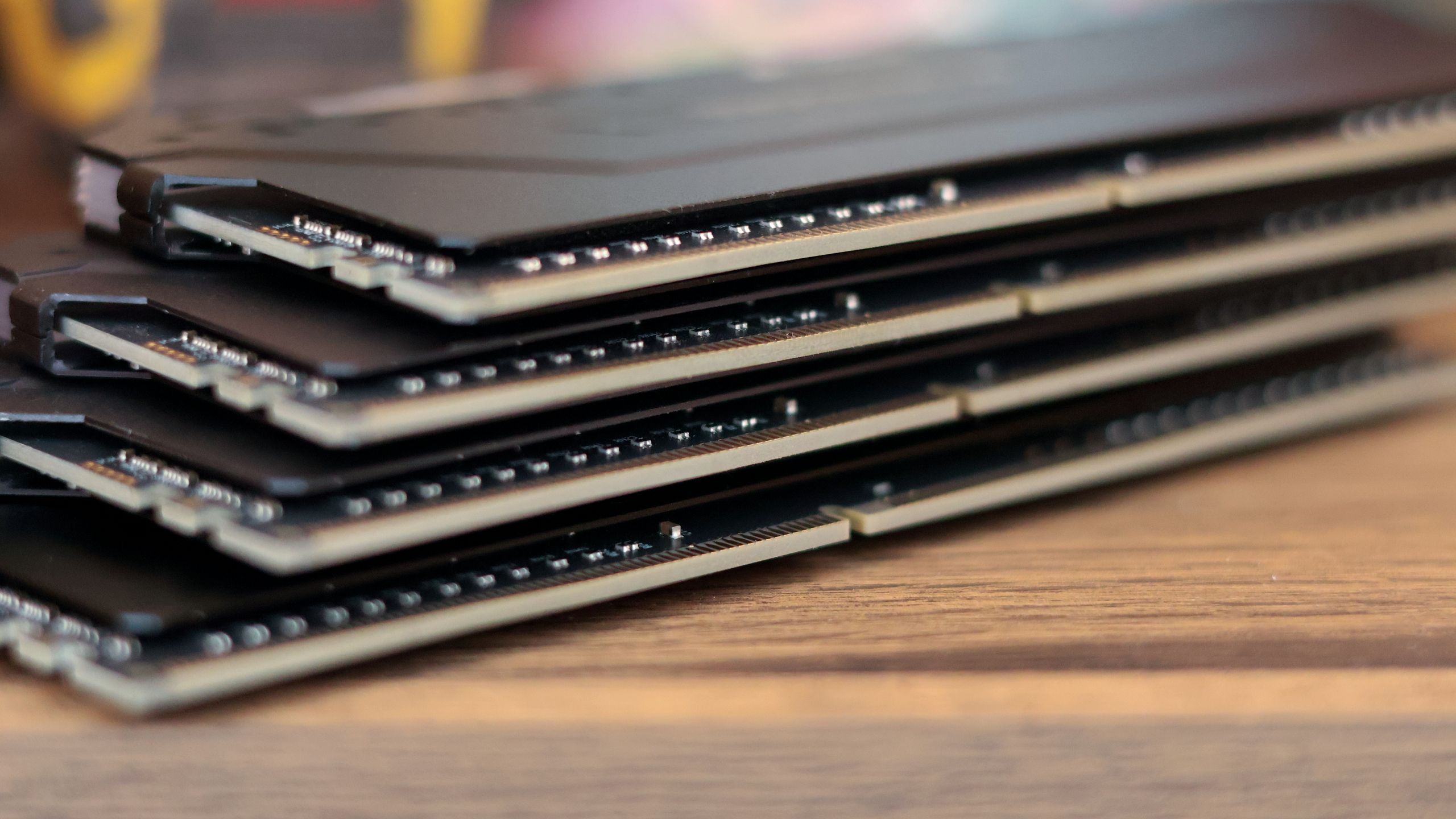
Give it 10 years and civilians won’t be able to own PCs… We will be forced to the cloud computers. And by that time AI surveillance and profiling will already have its infrastructure built.
We need to figure out how to do our daily things with very few computing resources. Gaming and heavy workloads excepted, most things we do ought to be possible on 15 year old CPU’s and 2GB. All we need is efficiency and low expectations. Fuck em.
Yeah. We went to the moon with, like, 1 MHz CPU and 2 KB RAM.
Not even. The Intel 8008 didn’t even break 1MHz and that was a few years later.
I don’t know what they used on the moon landing, though.
An efficient, real-time multitasking software stack on a 2MHz processor with the equivalent of ~4K of RAM and 64K of ROM.
Smart enough to handle being accidentally overloaded by its operators and still balance a spacecraft on a single engine and land on the moon while doing multiple reboots to clear its software stack. It would work its way down a list of “fly a spacecraft” tasks from critical, to informational, to just monitoring, with a certain amount of time allocated to complete the whole list. If it ran out of time, it would drop everything, perform the equivalent of a reboot with navigation parameters parked in memory, and then start again at the most critical task.
Apollo 11’s crew accidentally left their rendezvous radar (which was checking on the location of the command module in orbit) in a mode that constantly poked the computer with “pay attention to me” interrupts, and it couldn’t service the radar and run through it’s task list completely while it was on descent to the lunar surface.
To the programming team’s credit, this just caused an overload alarm a few times and the mission completed successfully.
The Apollo programmers pretty much created the whole software engineering field from scratch in the 10 years before 1969.
Very cool, thanks for the detail.
Aldrin deliliberately ran the approach radar which was not in the standard operating procedure
That’s maybe what was on the LEM. The total computing power including the mainframes “back home” was a wee bit more.
https://en.wikipedia.org/wiki/IBM_System/360_Model_91
(Also besides the fact that it was 200000+ gallons of kerosene that did the “going”)
That’s still about 1000x less raw CPU performance than the cheapest smartphone on the market, though.
(E.g. a Blu View 5 Pro, which is the cheapest Tracfone is listing as in stock, for $30. Its Helio G36 uses 4 Cortex A53 cores at 2200MHz and 4 at 1800 MHz, and between 1-2 instructions per clock, giving between 16000-32000 million instructions per second. The IBM ran at 16.6 million instructions per second, per that Wikipedia link.)
(Looking at Walmart turned up a TCL K33 5G for only $20, but it uses a Dimensity 6300 cpu which is actually a little more powerful.)
Which just shows we waste tremendous computing resources on trash.
Agreed.
It was already possible to do that. Then Electron came in and developers thought it was better to just release stupid apps that take 4 GB of RAM each.
deleted by creator
This is the time for Permacomputing to shine.
[email protected]
And even gaming is possible with those specs: retro gaming and emulation, thousands of excellent games
If you take gaming out of the equation though I don’t really need any sort of computing power.
How did you write this? Are you a wizard?
Its already here. Most “regular” users already depend for most part of there digital life on subscription based cloud computing. Al lot of people don’t even own a PC anymore, only mobile devices.
I was there on the first wave of the cloud boom (2012-ish), it’s biggest pushers got really angry that we weren’t up to give up our computers for “sleek, slim, and elegant” devices that would make wires “obsolete” at least in the home, so we can finally live in a sci-fi movie. They literally wanted us to use “browser app” DAWs that would do it’s computing on the cloud, then they realized many of us would like to record music, run live effects, etc.
This is the type of dystopia that I cannot bear to live in.