I agree, but the thing is, for social work, this is to distinguish people who literally sleep outside of houses due to poverty from the people who currently do not have a stable place they live and are couch surfing with friends and family for an undetermined amount of time before they move into a more stable accommodation they are responsible for.
As in, you can be homeless for a few months while you are moving between cities, but end up in an apartment after that, which is drastically different to having lost all your support networks and searching for a safe place to sleep each night in a city not knowing when you will get to have a fixed address and a bed to sleep in.
That’s the social work distinction between being in the broader category of “homeless” and “sleeping rough”.
Also, some homeless people are in the system and living out of shelters of various kinds, wheras others are outside the system and living on the street.
In Dutch we have a distinction between homeless and ‘roofless’, the latter being the general name for anyone sleeping outside or in a shelter. Whereas the first is used as a euphenism for anyone unhoused but has not been living on the street for multiple years. It’s a different distinction, but just as imperfect imo; since you don’t have 2 but 3 groups:
The not in the system but not on the streets (yet), sleeping in their car or moving from couch to couch,
The not sleeping on the street because the system is taking care of them (whether that system is functional or not, at least they’re not in the cold),
The ones surviving outdoors, voluntary or not.
In the Netherlands we decided foreigners who come to do cheap labour can get housed by their employer, when they lose their job they lose their house. We also decided the system should not let foreigners in. We also decided the system is only for addicts and people with mental health issues. Maybe in other places with other rules these three groups are less distinctly divided, but either way: all three groups deserve a name that is not demeaning nor dismissive. You’ll probably agree.


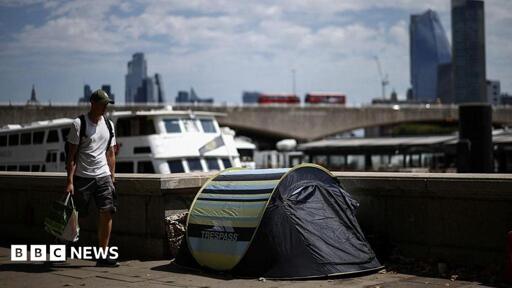
I agree, but the thing is, for social work, this is to distinguish people who literally sleep outside of houses due to poverty from the people who currently do not have a stable place they live and are couch surfing with friends and family for an undetermined amount of time before they move into a more stable accommodation they are responsible for.
As in, you can be homeless for a few months while you are moving between cities, but end up in an apartment after that, which is drastically different to having lost all your support networks and searching for a safe place to sleep each night in a city not knowing when you will get to have a fixed address and a bed to sleep in.
That’s the social work distinction between being in the broader category of “homeless” and “sleeping rough”.
Also, some homeless people are in the system and living out of shelters of various kinds, wheras others are outside the system and living on the street.
In Dutch we have a distinction between homeless and ‘roofless’, the latter being the general name for anyone sleeping outside or in a shelter. Whereas the first is used as a euphenism for anyone unhoused but has not been living on the street for multiple years. It’s a different distinction, but just as imperfect imo; since you don’t have 2 but 3 groups:
The not in the system but not on the streets (yet), sleeping in their car or moving from couch to couch,
The not sleeping on the street because the system is taking care of them (whether that system is functional or not, at least they’re not in the cold),
In the Netherlands we decided foreigners who come to do cheap labour can get housed by their employer, when they lose their job they lose their house. We also decided the system should not let foreigners in. We also decided the system is only for addicts and people with mental health issues. Maybe in other places with other rules these three groups are less distinctly divided, but either way: all three groups deserve a name that is not demeaning nor dismissive. You’ll probably agree.