

cross-posted from: https://lemmy.world/post/51634640
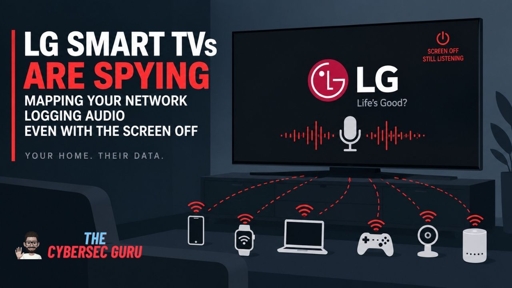
A new Gamers Nexus investigation found a retail LG TV actively scanning the local network for phones, laptops, smartwatches and other connected devices, while also capturing microphone audio when the screen appeared to be in standby. The investigation found voice data being stored locally even after the TV was disconnected from the network, with the queued data uploaded once connectivity returned. Researchers also uncovered webOS vulnerabilities that could potentially turn the television into a remotely controlled surveillance device. The really unsettling part isn’t just the advertising angle. It’s the fact that a consumer television can sit inside your trusted network, enumerate other devices, access a microphone, store collected data locally and communicate with external infrastructure. Put that same device in a corporate office, hospital, hotel or conference room and the security implications become considerably more serious. I went through the investigation in detail, including the network scanning, microphone behavior, ACR, webOS attack surface, offline data collection and practical mitigations
It’s not just LG. It’s all of them.
And, the cheaper the TV, the more often and intrusive these settings are.
It’s honestly better to just have a bare wall and a projector.
Consumer projectors come with the same “smart” shit as TVs these days. Just don’t connect either to WiFi. Problem solved.
Apparently not solved. They can connect to open (and hidden) networks without your consent.
Per the marketing chief at LG; (paraphrased, from memory) “we own the glass, and we know everything beyond the glass.”
That’s a wild claim and either I accidentally skipped a paragraph in the article or you should cite a source. Quick googling doesn’t show up anything of that sort for me.
It’s in the 2h long Gamersnexus video. The TVs aren’t connecting to open WiFi networks but connecting to other LG TVs within range. That forms some sort of mesh network that lets the TV access the internet. Apparently it’s not illegal wardriving because “they own the glass”.
I don’t have any specific evidence on hand, but I do know a lot about the technology and companies involved from working in adjacent fields (cloud architecture) and it is absolutely plausible that they can and do. If they are not doing it already (and I believe it is highly doubtful that at least some devices do not already do this) then it is certainly on their roadmap. Many consumer IoT/media devices have invisible, hidden wireless networks built in and have for years. If it’s advertised, it may boast some sort of “quick connect”, “auto configuration” or other convenience feature, it may be genuinely required for low-latency/quality-of-service (for example on most modern TV services which supply the channels by IPTV behind the scenes), but it’s always on, it’s always listening, and it’s only a friendly partnership agreement away from being used for whatever “legitimate” purposes a company may dream of.
Tech surveillance is extremely out of hand and has gone so far beyond anything would consider reasonable, I understand that you would instinctively reject it as too extreme to be believable. But in the industry it’s completely normalized and they don’t even give it a second thought, it’s just business as usual.
Look for articles about amazons sidewalk network and devices that connect to it without any kind of authorization from users.
That shit has been around since the echo came out and it’s open to any manufacturer.
There’s are lots of articles but my phone is too slow to load them at the moment.
I looked for but didn’t find any about LG TVs, the actual topic here and what the wild claim was made about.
I’m looking for a source as well. The “apparently” I used was supposed to cover the whole comment, but I can see how it didn’t.
The video goes into detail, and could be staged, but comments seem to support the idea anyway.
Amazon devices are known to do this with other Amazon products to create a mesh.
It’s not outside the realm of possibility.
From a privacy point of view: yes. From every other: not so much.
Projectors have become amazing.
Yeah and consumer oriented ones have their own apps and Google TV integration and the like, so no idea how a different image displaying tech would be a solution to privacy invasive TVs.
But they require dark room. Where I live in summer it gets dark at 23:00 so you need great curtains or you can’t see anything most of the day. If you have curtains you have to watch everything in complete darkness. This is fine for a movie night but people like to watch news or watch a game with their friends over some food. You also need extra device to handle apps like Jellyfin. Things like BT can be more complicated to set up (my TV handles multiple BT devices nicely).
Projectors are basically great for one or two things (home theater and gaming) but are bad for everything else.