

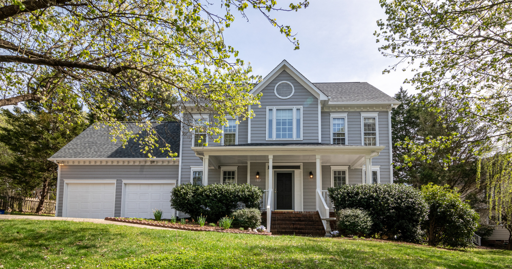
As CBS News Atlanta previously reported, more than one in four single-family rental homes in metro Atlanta are owned by large corporate investors — more than 72,000 homes — giving the region one of the highest concentrations of institutional ownership anywhere in the United States.
Housing advocates have argued that those companies can outbid families with cash offers, reducing the number of homes available to first-time buyers while contributing to higher home prices and rents.
Warnock has repeatedly cited those trends in pushing the legislation, saying corporate investors have increasingly treated homes as financial assets instead of places for families to live.
Frankly the limit should be 0 for private equity. The only exception should be for mortgage lenders (for obvious reasons) who should also not be ownable by PE or VC.
It should not be legal for corporations to own a residential property outside of the context of a mortgage. Any corporation (here, including banks) owning a residence for the purpose of rental income should be flat out illegal as well.
If it were me, I would have just passed a federal tax on property where whatever the local city, state, and county taxes are, there’s also a federal levy of property taxes of the exact same amount multiplied by the number of properties each taxpaying owner owns - 1.
So if you own one home, you pay no additional taxes.
If you and your spouse own two homes, you pay no additional taxes.
But if you own five 1 million dollar properties as a single person and the property taxes on each of those properties is $5,000, then instead of paying a total of $25,000 in property taxes as a single homeowner, you would pay
$5,000 * 4 * 4 + $5,000, or $85,000/yr.
That $60,000 a year difference for being a multiple homeowner would go into a fund specifically to provide grants and assistance for low-income renters and first-time homebuyers.
This would make it so that owning multiple homes becomes a sign of affluence.
And it would put a steep price curve on going over the limit of even moderately reasonable amounts of homes to own as a person.
Adding one additional $1 million home with a $5,000 property tax annual on it would actually add another $45,000/yr to the taxes that you would pay compared to someone who only owns that single home, and doing it this way, make sure that the scale of increasing taxes that you would pay on home ownership would become exponentially prohibitive.
It would also ensure that at a very reasonable point, no matter how much you charged for rent, for any property you own, once you own more than four, it becomes impossible to actually profit off of multiple home ownership, because very quickly, no renter in the universe would pay what you need to earn in order to cover the taxes off of owning that property.
This is part of my pitch to become president in 2032 when I become eligible.
Oh, slight correction. Add the original taxes to the numbers I generated because the federal taxes are separate from the city, state, and local taxes.
So in the first example, $85,000 plus $25,000 equals $110,000 a year to own five $1 million properties at $5,000 a year property taxes.
And in the second example, $130,000 plus $30,000 equals $160,000 a year to own the sixth one.