People also said A.I. wouldn’t happen. I don’t trust them to not find some way to implement it in the worst possible way that impacts all of humanity. Like permanent daylight or something so there’s never time to sleep but now there’s 12 more hours in the day
They’re still limited by the laws of physics and geometry. Assuming perfect reflection and perfect alignment with the sun to the target destination you’re looking at something like 0.1 percent of the total brightness worth of energy being transmitted to the surface of the earth.
In other words, considerably dimmer than the moon. It’s not going to turn night to day, it’s not even going to turn at night to dusk, it will be the brightness of a crescent moon on an overcast night, assuming clear conditions. Covering an area of less than 3 km for a period of time of less than 20 minutes (increase the orbital altitude and you increase the amount of time that you can be over an area but you also decrease the brightness) I don’t think Mr Badger is really going to notice.
But as I said this is irrelevant because they know this which is why they’re not going to do it.
I agree with you that the current thing seems innocuous enough… but I think we’ve all been traumatised by recent events. Things have had a way of escalating extremely quickly, like: “oh yeah, we just approved 10,000 more satellites without even giving the general public a chance to react, so what?” Also, someone should coin that anime name.
It’s a 50k constellation or some proportion that’s the problem. Also it’s who gets to approve such a monstrous plan? Surely not a national government as it is an international issue.
Also it’s who gets to approve such a monstrous plan?
The FCC. It’s in the title. There’s more detail in the article if you want.
Surely not a national government as it is an international issue.
Satellites have always been regulated by the nation they’re launched from or owned by. There are international treaties regulating some aspects of that, but treaties are implemented by their signatories - the national governments.
My point is why the FCC? It is a US government entity and as the current US government is pretty rabid, why should they be able to inflict this sort of thing on the the rest of the world? Maybe this will be a straw too many and force change. The whole Starlink debacle is bad enough but to add huge mirrors is just madness.
Yep, it say the FCC only looks at communications and not light pollution or congestion. That it is a US government entity and doesn’t mention anything outside the US.
You may think there should be a federal agency whose job is to regulate light pollution from satellites, but there isn’t one. You may think there should be some kind of international body that is able to impose decisions on all the nations of the Earth, but there isn’t one - treaties are agreements between sovereign nations. And so the FCC approved this satellite, in accordance with the laws of the United States and in accordance with the treaties the United States has signed. Nothing underhanded or nefarious is happening here.
Last time a proposal like this made the rounds on the Internet stirring up consternation, the proposal was to use space mirrors to replace the street lighting for the Chinese city of Chengdu. It would have had no net effect on light pollution and would have reduced electricity consumption to boot.
Bear in mind, this mirror focuses its light on a specific 5km-diameter patch of land. It won’t be visible elsewhere.
The visibility doesn’t consider the massive glow that would appear to anyone seeing them outside their intended area of use due to reflections off dust and particles in the atmosphere. Light pollution goes far outside the area where cities are for the same reason, and having these in low earth orbit as a replacement for streetlights or as a spotlight would both have that happening.
That’s part of why experiments like this are done. Reflect Orbital would prefer that the spot be kept as tight as possible, they ultimately need to test out the technology to refine it.
Almost everyone in this thread seems to be jumping straight from “their first prototype was approved for testing” to “therefore every plan of theirs is about to be immediately implemented.” And the dopamine that comes from the ensuing rage and fear is making it hard to accept otherwise, it’d kill the buzz.
I was not thinking about combining the beans, but about the surface that 50k of them would cover and the amount of additional light that would represent. I do hope it’s just some vaporware.
Why would they spread the light evenly? They’re planning on selling it. Someone would need to pay them to have a place illuminated, it’s not going to be randomly beamed all over.
Again you’re implying something I didn’t mean, but the point is that having 50k times the equivalent of the moon light intensity is expected to have a bad impact on the environment.
I’m not seeing why. Do you have any links to sources about that? If they were to focus all 50,000 mirrors on one 5km patch of land simultaneously that’d be 5000 lux, which is less than 5% of the intensity of full sunlight at noon. It would be impossible to do this since the 50,000 mirrors would be spread around the Earth, and if you brought them all together into some kind of grand conjunction they’d only remain in position to do so for a few minutes.
Do we need a paper to estimate that ecosystems that evolved with a night time with a moon (mostly partial, sometimes absent), are going to be disturbed by having 50k of them?
Also it’s the new product’s responsibility to demonstrate its safety.
I think you’re drastically misunderstanding how this proposed constellation would work. It’s not putting 50,000 “moons” in the sky. You can only see the light from the mirror in that one specific 5km patch of land that it’s being aimed at. The vast majority of the world - including all the “wilderness”, because who would pay to point these things at random patches of undeveloped wilderness - will not receive extra light from these things.
It’s more like setting up floodlights at a construction site, or street lights in a city.


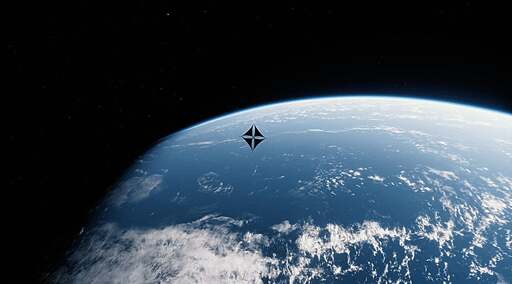
“Sunlight on demand” is an exaggeration. The plan is to create a 5km spot of 0.1 lux, which is a bit brighter than a full moon.
Every time I’ve seen this news posted (and I’ve seen it a lot over the past few days) everyone has leapt to some very extreme conclusions.
Not really extreme. The whole concept is bonkers. What right has a company to destroy the night huge numbers of people and not mention wildlife.
Don’t worry it’s not going to happen. They’re just after investor money then they’ll vanish.
Even if they actually build this, a very small area of the planet is going to be imperceptibly brighter for 35 seconds.
People also said A.I. wouldn’t happen. I don’t trust them to not find some way to implement it in the worst possible way that impacts all of humanity. Like permanent daylight or something so there’s never time to sleep but now there’s 12 more hours in the day
They’re still limited by the laws of physics and geometry. Assuming perfect reflection and perfect alignment with the sun to the target destination you’re looking at something like 0.1 percent of the total brightness worth of energy being transmitted to the surface of the earth.
In other words, considerably dimmer than the moon. It’s not going to turn night to day, it’s not even going to turn at night to dusk, it will be the brightness of a crescent moon on an overcast night, assuming clear conditions. Covering an area of less than 3 km for a period of time of less than 20 minutes (increase the orbital altitude and you increase the amount of time that you can be over an area but you also decrease the brightness) I don’t think Mr Badger is really going to notice.
But as I said this is irrelevant because they know this which is why they’re not going to do it.
I agree with you that the current thing seems innocuous enough… but I think we’ve all been traumatised by recent events. Things have had a way of escalating extremely quickly, like: “oh yeah, we just approved 10,000 more satellites without even giving the general public a chance to react, so what?” Also, someone should coin that anime name.
It’s a 5km diameter target area. It’s not going to be shining on random patches of wilderness.
That’s just for one mirror, they’re saying they want fifty thousand up there.
But they only have approval for one.
It’s a 50k constellation or some proportion that’s the problem. Also it’s who gets to approve such a monstrous plan? Surely not a national government as it is an international issue.
The FCC. It’s in the title. There’s more detail in the article if you want.
Satellites have always been regulated by the nation they’re launched from or owned by. There are international treaties regulating some aspects of that, but treaties are implemented by their signatories - the national governments.
My point is why the FCC? It is a US government entity and as the current US government is pretty rabid, why should they be able to inflict this sort of thing on the the rest of the world? Maybe this will be a straw too many and force change. The whole Starlink debacle is bad enough but to add huge mirrors is just madness.
The article explains the answer to this very question.
Yep, it say the FCC only looks at communications and not light pollution or congestion. That it is a US government entity and doesn’t mention anything outside the US.
So there you go. That answers your question.
You may think there should be a federal agency whose job is to regulate light pollution from satellites, but there isn’t one. You may think there should be some kind of international body that is able to impose decisions on all the nations of the Earth, but there isn’t one - treaties are agreements between sovereign nations. And so the FCC approved this satellite, in accordance with the laws of the United States and in accordance with the treaties the United States has signed. Nothing underhanded or nefarious is happening here.
That would be multiplied by 50k according to their plan, wouldn’t it? That’s a lot of moons.
It would be completely impossible for them to all focus on the same spot, they’d be distributed around the world.
Also, that’s not been approved. This approval is for a single prototype.
The amount of light pollution we have from cities is already more than necessary given that it covers makes most stars impossible to see.
I don’t think a large quantity of small fake moons is gonna help with that.
Last time a proposal like this made the rounds on the Internet stirring up consternation, the proposal was to use space mirrors to replace the street lighting for the Chinese city of Chengdu. It would have had no net effect on light pollution and would have reduced electricity consumption to boot.
Bear in mind, this mirror focuses its light on a specific 5km-diameter patch of land. It won’t be visible elsewhere.
The visibility doesn’t consider the massive glow that would appear to anyone seeing them outside their intended area of use due to reflections off dust and particles in the atmosphere. Light pollution goes far outside the area where cities are for the same reason, and having these in low earth orbit as a replacement for streetlights or as a spotlight would both have that happening.
That’s part of why experiments like this are done. Reflect Orbital would prefer that the spot be kept as tight as possible, they ultimately need to test out the technology to refine it.
Almost everyone in this thread seems to be jumping straight from “their first prototype was approved for testing” to “therefore every plan of theirs is about to be immediately implemented.” And the dopamine that comes from the ensuing rage and fear is making it hard to accept otherwise, it’d kill the buzz.
I was not thinking about combining the beans, but about the surface that 50k of them would cover and the amount of additional light that would represent. I do hope it’s just some vaporware.
Why would they spread the light evenly? They’re planning on selling it. Someone would need to pay them to have a place illuminated, it’s not going to be randomly beamed all over.
Again you’re implying something I didn’t mean, but the point is that having 50k times the equivalent of the moon light intensity is expected to have a bad impact on the environment.
I’m not seeing why. Do you have any links to sources about that? If they were to focus all 50,000 mirrors on one 5km patch of land simultaneously that’d be 5000 lux, which is less than 5% of the intensity of full sunlight at noon. It would be impossible to do this since the 50,000 mirrors would be spread around the Earth, and if you brought them all together into some kind of grand conjunction they’d only remain in position to do so for a few minutes.
Do we need a paper to estimate that ecosystems that evolved with a night time with a moon (mostly partial, sometimes absent), are going to be disturbed by having 50k of them? Also it’s the new product’s responsibility to demonstrate its safety.
I think you’re drastically misunderstanding how this proposed constellation would work. It’s not putting 50,000 “moons” in the sky. You can only see the light from the mirror in that one specific 5km patch of land that it’s being aimed at. The vast majority of the world - including all the “wilderness”, because who would pay to point these things at random patches of undeveloped wilderness - will not receive extra light from these things.
It’s more like setting up floodlights at a construction site, or street lights in a city.