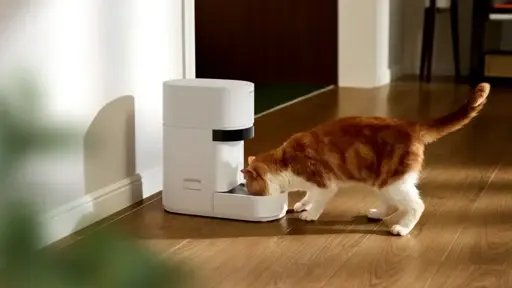
This feels like bad design
Smart pet-feeder company Petlibro suffered an outage on Tuesday, giving users a harsh reminder of the risks of relying on smart devices.
Petlibro makes pet feeders that connect to Wi-Fi and, for setup with Petlibro’s mobile companion app, Bluetooth. Users can set the feeders to automatically dispense food at scheduled times, which is handy for pet care when the owner is out of the home.
In a statement to The Verge, Petlibro CEO York Wu said this week’s outage was “related to how the Petlibro app communicates with devices through its online servers.”
Some user reports have also conflicted with Petlibro’s claims about offline functionality. As The Verge pointed out, various users online claimed that during the outage, their devices did not perform any scheduled feedings, performed some feedings but not others, or performed feedings late (examples here, here, here, here, and here).
It needs wifi???
Your feeding schedule writes a cron job on their server, which then runs and commands your feeder to operate. Standard pattern.
/jk (I hope)
wtf why is it requiring wifi for a mechanism that should simply just rely on electricity if nothing else?
This is reminding me of the copypasta where the it admin keeps a gun next to the printer.
Also my automatic pet feeder is dumb and only runs on electric
It is bad design. The entire system control could be on a microcontroller inside the machine itself. There’s no reason to route data through a cloud server just for basic functionality (other than greedy data farming, of course).
That’s a single point of failure, and not even very reliable, for something that provides a basic necessity to a living being.
That being said, any pet owner who relies on an automated feeder and doesn’t check it regularly to make sure it’s working properly, is neglecting their pets. They share a portion of the responsibility here.
Still, I wish products marketed for pets were regulated better to ensure safety.
They save money by offloading the processing to your phone.
Then the process should happen on the phone locally and not by connecting to their servers which run the processes and then send commands back to the device through your phone…
I ain’t arguing it’s a good setup. Somewhere there’s a spreadsheet showing how many dead pets they can get away with before their cost-saving strategy goes into the red.
I have a Petlibro, but one of the old ones that has no cloud connection and no app. You just program it on the feeders interface itself. From a mechanical standpoint they are pretty awesome and feeding the proper amount of food is so much easier than doing it manually.
Yeah, now imagine how much better (/s) that would be if “the cloud” was looped in to the timer so that any network outage or server outage or successful hack or DoS attack caused your feeder to malf.
These smart gadgets could be good but they are so terrible. I bought a discount smart LED bulb. I was like let’s try it out, it can’t be that bad. Then I realized why was it discounted:
The lightbulb does not work without being connected to the internet, it just flashes in the most annoying way.
Nowhere on its box it was written, hey you have to connect this lightbulb 24/7 to the internet. Just some nice things, like you can dim it and change the colors. Not to mention these shady apps selling your data, asking access for your contacts, pictures and files.
They far overdid the opportunistic predation in many ways.
I can easily imagine a nightmare, where everything people own, get locked down this way. The world is going into that direction.
If you want actually pretty good smart home stuff, and for cheap, go to IKEA. By default they require nothing but being paired to a button/dial/motion sensor that works entirely on a local mesh network (Zigbee, or more recently Matter over Thread) between the devices. You can buy a hub, which again by default is local only - to control the lights using your phone you need to be connected to your own wifi. And if you really want to control them from somewhere else (or use Siri/Google Assistant etc), you have to specifically enable that functionality.
And because they use matter, they work with most of the other matter stuff, and vice versa - I have a bunch of Aqara temp/humidity sensors connected to mine. And you don’t even need an IKEA hub, any Matter hub will work, and there are quite a few of them including stuff like the Google Home Speaker, a 3rd gen Apple TV, and the Apple Home Pod.
Main downside? IKEA electronics aren’t exactly the most reliable things around.
Its cheaper.
They can design the device to be standalone, with increased hardware costs…or farm that processing to their servers, with the bonus of also giving them the ability to kill it on command so you just have to buy a new one and having lots of metric data to sell
I guarantee you the microcontroller that handles the wifi is 10x more powerful than what would be required to just run an offline schedule.
There’s no processing involved… It’s not like this is using a camera + AI to see if your cat is too fat.Edit: I just looked up this model and its actual features… it’s not that far off, since it seems to run image recognition to tell when the cat is eating. If they’re streaming video back to the cloud for processing, that sounds even worse than what I was expecting. It would be entirely possible to run a small image recognition model locally in a product like this.
There are much simpler solutions like the ones that detect a chip in the pets collar (or the embedded id chip most pets have)
automatically dispense food
Okay
use an app to set it up
Makes sense
cloud outage caused missed feedings
wtf? Doesn’t the thing have an internal clock? Doesn’t it just set a cron job? Seriously, if you want to farm data all day long, do that and just send it back. But if having to be online to do its core function is required, that’s extremely poor design.
They can’t charge a subscription for an internal clock
Or push ads, or gather data on users.
An app is always a red flag, especially if it’s the only way you can interact with the device.
The level of sophistication of our pet feeder at home is a fistful of kibble pulled out of a bag and dropped in a bowl. If we’re away, we have a good neighbour who drops in to check on the cat, or the cat stays with my family. I’m an IT professional, and prefer my house to be as dumb as possible.
Of course I will post a picture of my cat when mentioning him. His name is Nemo.

May be an orange, but you sure have a smart system to alert you if the kibble is late.
Nemo appears to be starving. You should ensure nemo is given many treats to fix this problem.
His hunger is insatiable, as evidenced by his annoyed moaning whenever he glimpses the bottom of his food bowl. His foster home had turned him into a mega-chonk, but I got him in the right track. Now he’s part killing-machine, part cuddle-machine.
Nemo is such a beauty, he looks very soft and cuddly.
Thank you. He’s indeed soft and cuddly, though also drooly and clawy. We love him.
I can’t dispense 2 upvotes (one for the comment one for the cat pic) so just get this comment
I bet Nemo loves to sit on your keyboard when you’re trying to type.
He’ll lie down between my arms and rest his head on my lower arm while my hands are on the keyboard. Good touch typing practice, as I can’t see the keys.
Sounds like a dumb way to feed your pet that the device can’t work without the cloud. Nothing new but still you have to be real stupid to buy a device that will one day be cut off when the company abandons support.
Ah yes, the classic “the stupid consumers are stupid” argument.
This was sold as being an offline-capable device. It even has battery slots for power outages.
Perhaps instead of shitting on people for buying something they thought would be nice and work well, we shit on the company that can’t even give a pet feeder an on-device offline schedule after selling people on a device that’s supposed to work offline and even during power outages.
And figure out how we can hack it and enable folks to control the hardware they own, because they weren’t stupid for buying a pet feeder. The company that runs it just does so in a moronic way.
(I don’t own one of these, but I have considered it a few times, and this just pisses me off)
So is it poor design or cases where users didn’t put batteries in?
Any cloud connected device that stops functioning when there is a outage is stupid. Its stupid to buy one.
What about a device that can function offline?
Yes. That is what I’m saying.
But that’s what they bought. That’s what was advertised and sold to them.
It was just false advertising.
I’ve bought two cloud connected devices that promised manual control. Only one did. It was the first thing I did was verify it was true by never using the cloud part of it.
Why can’t these schedules be held locally in the device memory.
But then they cant turn off the servers in 18 months, forcing you to buy a new one?!
The answer is lazy design. It was cheaper and easier to make it a dumb device that gets all direction from a server. Less complexity and more control on their end. Also, subscription.
They totally can. We used to have a super low tech one. It was like an old cookie timer. You crank a wheel over to the number of hours you wanted (so it only worked over a day or so)and a spring inside just turned the crank back until a little hole lined up with a notch allowing the door to open. There were two bins inside one device, so two feedings. No batteries. No Internet.
Monthly recurring revenue perhaps? I can’t be bothered to find out of this is a subscription but I bet it is.
There is a subscription service, but it’s not required. I don’t have it, but my pet got fed during the outage so maybe there’s a different line of devices that don’t work without the subscription…
To everyone criticizing the people who bought the device: It is sold as being capable of running without internet, and it often does. The problem is that some update along the way broke this functionality ( maybe on purpose ).
The device has 3 D batteries to survive even power outages.
I’m not defending the company, I absolute despise them, they lied to consumers and should suffer a class action lawsuit.
And this is why you use local only devices fools.
Get yourself a Zigbee Pet Feeder and pair it with Home Assistant and you’re good to go.
Why in fuck would a device that activates a motor once or twice a day on a schedule need any kind of network connectivity? This is an ultra-dumb programmatic function, it shouldn’t need any more compute power than an alarm clock. Why would you hook it up to a smart home anything?
It should be exactly this complicated:

Anything beyond that is like killing a housefly with a bazooka.
The ability to play with it, without having to fiddle with tiny switches is a big feature to many. Often these are used by people with mobility issues. The ability to add an extra feed, due to exercise, or adjust the timings to account for changes in life plans are a godsend to many.
Smart home devices are a balancing act. The extra control means more can also go wrong. Minimising that is a big part. The most critical is making it behave sanely when it suddenly goes offline. E.g. smart light switches become dumb ones, when the central hub goes down.
OK, add a simple remote control with buttons for adjusting the schedule and triggering a manual feed. No need for that to be any more complicated than a TV remote from the 90s. Keep it offline, no problem.
To each their own. I prefer having the ability to adjust things from 1 central source. I’m prone to losing remotes.
Also, how would you do such a remote. You would also need a screen for feedback etc, which puts you back at square 1.
Also, a remote would be considerably more expensive than the extra cost of a ZigBee/Wifi enabled microcontroller.
To each their own. I prefer having the ability to adjust things from 1 central source. I’m prone to losing remotes.
My preference is for devices to be as simple and reliable and end-user repairable as possible. I have an aversion to any kind of appliance that might be dependent on someone else to update software or maintain a network service to keep operational. No software dependence at all if possible, just a basic microcontroller and firmware. Again, there’s nothing to this that needs to be any more advanced or complicated than the functions of a basic alarm clock like this:

Instead of setting off an alarm, we’re activating the feeding mechanism. Dead simple. Hell, you could probably make this yourself by wiring the alarm from a clock like this to a motor that moves the feeding mechanism.
Also, how would you do such a remote. You would also need a screen for feedback etc, which puts you back at square 1.
Nah, there’s no reason feeding times need to be any more granular than per-hour. You can show that with a 2x6 grid of 12 indicator LEDs, with a 13th AM/PM indicator. On lights indicate hours when feeding will activate. You could have that on both the remote and the feeder, cheap and easy. Maybe you have a 14th indicator that lights up if the food in the storage bin is low and needs refilling.
Also, a remote would be considerably more expensive than the extra cost of a ZigBee/Wifi enabled microcontroller.
Definitely not, because it’s not fair to count the cost of only the link hardware on the feeder, you have to account for the cost of the rest of the smart home system to operate it. A remote like this is dirt cheap:

You’re over thinking what this really needs to do. It’s a timer that activates a switch, that’s all.
It’s worth noting that I think both should exist.
No software dependence at all if possible, just a basic microcontroller and firmware.
Agreed, I just want a ZigBee endpoint as well.
As for the smart home stuff, I already have it in place, so it’s no additional expense.
Control wise, your method would be fine for someone techie and motivated. It would annoy the hell out of some non techies, particularly if they had vision issues (think OAP). It would also close down the option of relatives helping out by monitoring it remotely.
As I said, different target audiences. Both have their places. I just wish the smart option did its job properly, rather than the half baked options we keep getting.
Totally agree (keep it simple) and I use a simple timer failsafe on mine, but just pointing out:
Minimum interval of that plug will fill the bowl jam the motor. Gears will strip without intervention.
Nbd tho, you can wire up a secondary timer relay circuit for portion control. Just keep the wires tidy, and raised if there’s a water bowl nearby.
And probably don’t want 220 anywhere near the feeding area so use a 5v wall wart or whatever.
Eh, might also want to consider a battery backup option in case power goes out while you’re on a work trip.
Just make sure to keep both interfaces accessible for later manual adjustments. Can take a while to dial it in, you know, based on current activity levels, which can change seasonally. Also be ready to fuck with it pretty much any time you switch their feed.
Etc etc
I kid — I’m sure you get why nerdy control freaks wire these things up to HA and whatever
Gotta find one (cheap) that doesn’t do the wrrrr-tick-tick-tick 24/7 though.
I’ve got a dispenser that basically works like a gumball machine. Goes every day and only needs to be refilled maybe once every month or two. Even has a battery backup in case the power goes out while we’re on vacation or something. No need for smart home integration, just listen to your pet when they complain that they don’t have any food, and make sure you’re full up before leaving for an extended amount of time.
Which do you recommend?
I got the cheapest timer-based one I could find ($18) and spliced the 5v motor wires with a Shelly switch (flashed for local-only matter).
I settled on this solution after 3 prior attempts with more expensive feeders because none of them let me control portions and regularity adequately, which ultimately comes down to “cycle hopper motor N seconds at T1, T2, … , TK for K meals/day.”
That’s been doing its job for nearly two years, cat’s weight stabilized, and his feast/famine eating behaviors disappeared, so I couldn’t recommend anything more complex than that.
ETA: only important if you travel but…
Also added a small relay that reconnects internal AA battery pack on power loss. Which converts unit back to a self-contained timer-based feeder.
The only time that has triggered is when unplugging the unit to clean or when I’ve accidentally turned off the power strip’s energy monitor plug. Not important unless you’re away from home a lot and/or outages are common in your area.
Aquara C1. Use Home Assistant and your own Zigbee antenna.
$89 isn’t terrible
Which zigbee pet feeder?
It would be nice if there is list of devices/companies which support local integration, it there anything?
deleted by creator
Repeat after me: Local control. Local control. Local control.
“The Cloud” is just other people’s computers.
Home Assistant, my beloved.
Spread your knowledge, but most are not motivated or equipped
But people no longer have computers at home. More and more rely on just phones or can’t even use anything else.
That’s a a public education problem.
Happy user of petlibro here and I’m very happy that when I bought it, I went explicitly for the non wifi - non cloud connected version.
My fish tank feeder had a clock, and I set the times. To feed it. There shouldn’t be any smart needed.
Again, why do we need to unnecessarily complicate stuff with multiple IoT options?? Why can’t it have a fallback offline like idk…a SIMPLE TIMER? Or is it another case of “AI integration” into yet another thing which doesn’t need AI!
it’s because shareholders want the company to “innovate” and in a space where nothing can really improve these devices people will add whatever is new or trendy. IoT and cloud stuff is still very trendy. I wouldn’t be surprised if there were startups or devices based on AI pet feeder tech.
Not because it’s new and good, but because shareholders want money to go up.
True. One can only innovate so much in a particular product. So, every company irrespective of requirement is putting “AI” into their products just to make investors happy which in turn screws cust experience in a lot of cases. The best example is AI customer service desk. Oh god! It’s rare these days to get human support. Seems like every company has onboarded AI support system