A device currently being used to help octogenarians do self-administered eye exams could be part of future space missions to monitor astronauts’ ocular health.
“Spaceflight-associated neuro-ocular syndrome (SANS) is a collection of eye and brain changes caused by spending prolonged periods in a low-gravity environment, and it impacts around 70 percent of astronauts on the International Space Station, according to NASA. One of the starkest cases is that of NASA astronaut John Phillips, who launched to the ISS (e.i. : he went up into orbit in a space station) in 2005 with 20/20 vision, and splashed down (e.i. : he returned back to the Earth) six months later with his vision at 20/100 - - what’s considered a moderate visual impairment. While he was in space, bodily fluid, uninhibited by gravity, built up in his head, squashing his eyeballs, swelling his optic nerve, and pushing his retina forward.”


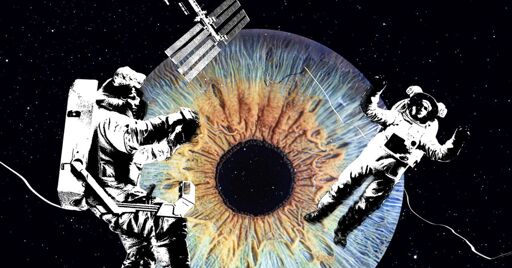
“Spaceflight-associated neuro-ocular syndrome (SANS) is a collection of eye and brain changes caused by spending prolonged periods in a low-gravity environment, and it impacts around 70 percent of astronauts on the International Space Station, according to NASA. One of the starkest cases is that of NASA astronaut John Phillips, who launched to the ISS (e.i. : he went up into orbit in a space station) in 2005 with 20/20 vision, and splashed down (e.i. : he returned back to the Earth) six months later with his vision at 20/100 - - what’s considered a moderate visual impairment. While he was in space, bodily fluid, uninhibited by gravity, built up in his head, squashing his eyeballs, swelling his optic nerve, and pushing his retina forward.”