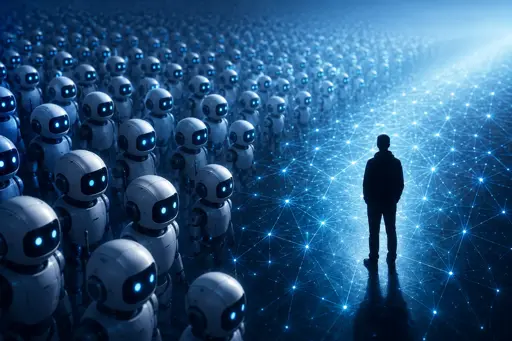
CDN and cybersecurity giant Cloudflare held its Q2 earnings call on Thursday, during which chief financial officer Thomas Seifert gave a concerning prediction about what the web...
Continue avoiding them – that should never change.
You still need crossings and traffic lights for an area to be livable by humans. You still need to drive slowly next to a pavement where someone could eg trip and fall onto the road.
Agreed.
All those examples seem like they’re in response to a goal of eliminating 100% of all congestion. I actually edited my comment to clarify that that’s not what I’m talking about, but that edit was many hours before your response. Is it still unclear?
Since we’re talking examples, maybe I can offer one to clarify:
Ever been in a traffic jam after someone ran a red light or stop sign and caused a wreck? If fewer (because zero is unrealistic) of those incidents happen, then there are fewer traffic jams caused by them, right? And when they do happen, it would be easier to reroute traffic early on – which might also make it easier/faster for emergency vehicles to get to the scene.
Or for an example that is completely unrelated to traffic: Condoms and vaccines are pretty effective. Maybe not 100%, but still enough to be useful. There are some areas in real life where absolutism is just unproductive.
Ever been in a traffic jam after someone ran a red light or stop sign and caused a wreck? If fewer (because zero is unrealistic) of those incidents happen, then there are fewer traffic jams caused by them, right? And when they do happen, it would be easier to reroute traffic early on – which might also make it easier/faster for emergency vehicles to get to the scene.
Yeah, this is reasonable, but that’s just lawful driving. You mentioned “coordination” before so I understood you meant that they will be able to drive significantly faster due to the coordination. That’s what I was responding to and why I pointed out reasons that autonomous cars will still have to drive carefully even if they are coordinating perfectly among themselves…
Or for an example that is completely unrelated to traffic: Condoms and vaccines are pretty effective. Maybe not 100%, but still enough to be useful. There are some areas in real life where absolutism is just unproductive.
Here’s my concern expressed in similar vein. Imagine a vaccine that you expect to be ~5% effective in the midst of a pandemic. You might say 5% is better than nothing, but actually it might give people a false sense of security. They might change their behavior (be less careful) to the point that the end result is the same or even worse than it was before the vaccine.
If we get autonomous vehicles, it’s almost certain that they will affect the number of cars on the road. If their (hopefully) better driving leads to only marginal gains in the prevention of congestion, the future might actually be more congested than the present.


No.
Continue avoiding them – that should never change.
Agreed.
All those examples seem like they’re in response to a goal of eliminating 100% of all congestion. I actually edited my comment to clarify that that’s not what I’m talking about, but that edit was many hours before your response. Is it still unclear?
Since we’re talking examples, maybe I can offer one to clarify:
Ever been in a traffic jam after someone ran a red light or stop sign and caused a wreck? If fewer (because zero is unrealistic) of those incidents happen, then there are fewer traffic jams caused by them, right? And when they do happen, it would be easier to reroute traffic early on – which might also make it easier/faster for emergency vehicles to get to the scene.
Or for an example that is completely unrelated to traffic: Condoms and vaccines are pretty effective. Maybe not 100%, but still enough to be useful. There are some areas in real life where absolutism is just unproductive.
Yeah, this is reasonable, but that’s just lawful driving. You mentioned “coordination” before so I understood you meant that they will be able to drive significantly faster due to the coordination. That’s what I was responding to and why I pointed out reasons that autonomous cars will still have to drive carefully even if they are coordinating perfectly among themselves…
Here’s my concern expressed in similar vein. Imagine a vaccine that you expect to be ~5% effective in the midst of a pandemic. You might say 5% is better than nothing, but actually it might give people a false sense of security. They might change their behavior (be less careful) to the point that the end result is the same or even worse than it was before the vaccine.
If we get autonomous vehicles, it’s almost certain that they will affect the number of cars on the road. If their (hopefully) better driving leads to only marginal gains in the prevention of congestion, the future might actually be more congested than the present.