

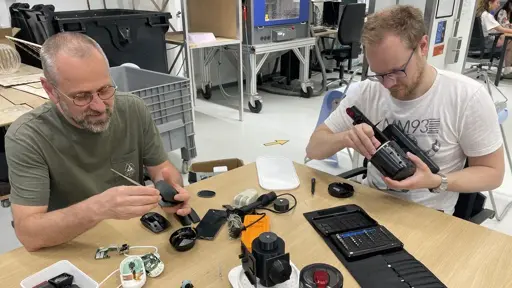
The products covered by the obligation to repair currently include:
- washing machines and washer-dryers
- dishwashers
- refrigerators
- electronic displays
- welding equipment
- servers and data storage products
- mobile phones, cordless phones and tablets
- tumble dryers
- e-bikes and e-scooters batteries (from 18 February 2027)
- local space heaters
It can be, but is a hassle. There are food safe filaments, there are filaments that “should be” safe, like unmodified PETG, but the issue is to make all parts that are in contact with the filament food safe; extruder gears, Bowden tubes and other guides, hot ends, etc…
I imagine that it would be a hassle for parts suppliers to certify the bajillion variations of these parts as food safe.
The filaments themselves may be food safe but that doesn’t matter. The resulting object is not food safe not because of the material but because of the manufacturing process. Printing layer by layer leaves miniscule voids and holes in-between layers where bacteria can thrive and which are impossible to clean.
Your print is safe to eat out of the first time, but is never food safe again as it can never be cleaned from bacteria in all the thin holes.
That is another factor, but not always true. If you print in a heat resistant filament that is also food safe (TBH I don’t know of one, but it probably exists), and use it for solids, like fruit bowls, cookie jars, and the like, and is dishwasher safe. It should be fine. The problem is that most people will not make the entire production path food safe. Too much liability for manufacturers, even with food safe materials.
Many youtube 3D printing influencers actually recommend brain dead shit like drying filaments with undisclosed ingredients in ovens or microwaves where they will cook food, and stupid shit like that.
That “should be” is a risk…
I (probably but very likely) have enough micro plastics in my body. Don’t need to supply it with a nuclear blast of it.
Rather buy a close enough replacement from a reputable brand or buy a better kettle for the next time (sadly).
The microplastic is the least important point when it comes to food safe products. Sure microplastic is bad, and we have no real idea about the long term effects, but there are there are things that already have effects on your health in the short term:
A lot of different plastic types release actual toxins over time, especially when exposed to high heat, since that destroys the molecular bonds. Having food or water touch these toxins is a great way to absord them into your body.
Apart from that most 3D printed materials have micro ridges and air pockets that are the perfect place for bacteria to grow. That’s probably the worst thing to have in your kitchen.